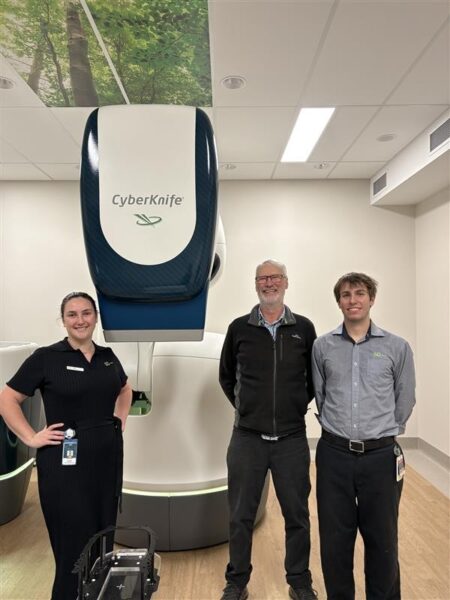
For patients with small or difficult-to-reach lung lesions, diagnosis and treatment can be challenging, particularly for those whose lung function is already compromised by conditions such as Chronic Obstructive Pulmonary Disease (COPD) or emphysema. At 5D Clinics Melbourne, Interventional Pulmonologist, Dr Barton Jennings and Radiation Oncologist, Professor Shankar Siva are combining two advanced robotic technologies to provide a highly targeted approach to selected lung lesions. The partnership brings together Ion Robotic Bronchoscopy and CyberKnife® robotic radiotherapy, connecting precise diagnosis with highly targeted treatment.
 Finding the target with robotic precision
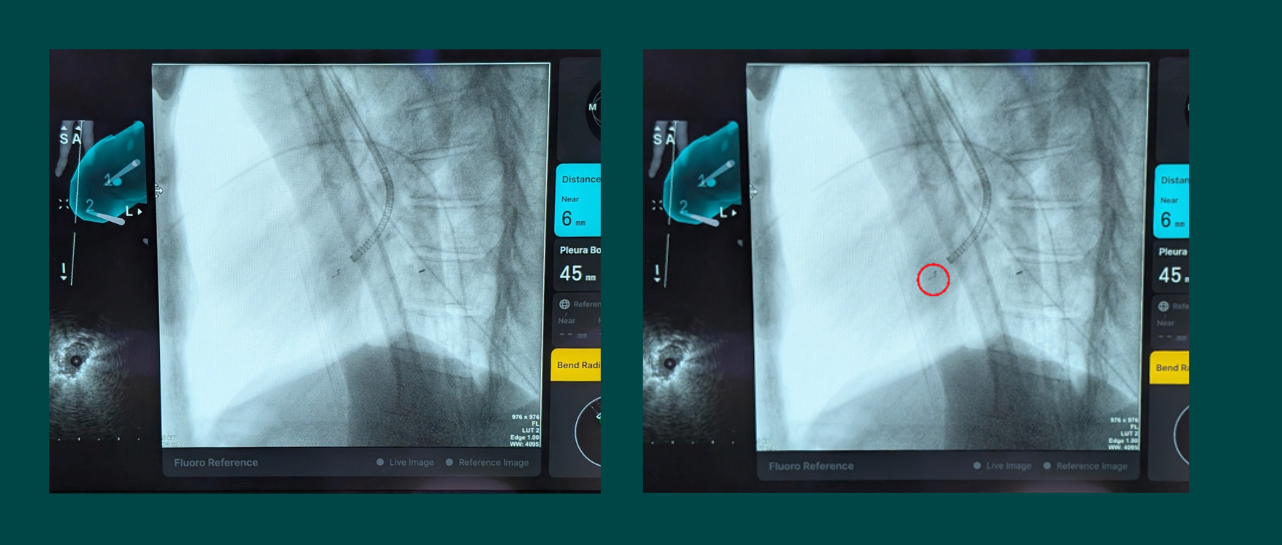
Using the Ion Robotic Bronchoscopy System, Dr Jennings can navigate deep into the lung’s narrow airways to reach small nodules that can be difficult to access using conventional bronchoscopy. The system uses a flexible, ultra-thin catheter that can be precisely steered towards the target. Once there, Dr Jennings can obtain tissue for diagnosis and place a small gold fiducial marker within or adjacent to the lesion. This marker then provides a reference point for the treatment that follows.
Tracking the tumour as the lungs move
Professor Siva uses the CyberKnife® System to plan and deliver stereotactic body radiotherapy (SBRT), a highly focused form of radiation treatment. Because the lungs move naturally as we breathe, treating a lung tumour requires precise management of that movement. CyberKnife® uses the fiducial marker placed during the bronchoscopy procedure to track the target and adjust the radiation beam as the lesion moves with respiration. This allows radiation to be delivered with a high degree of precision while limiting exposure to surrounding healthy tissue.
Two specialists, one coordinated approach
The strength of this approach lies in the collaboration between Dr Jennings and Professor Siva. Dr Jennings brings expertise in minimally invasive diagnosis and robotic navigation of the lung, while Professor Siva brings expertise in precision radiation treatment. Together, their work creates a pathway from robotic identification and marking of the lesion, through to targeted treatment.
For some patients with poor lung function, including those living with COPD or emphysema, this approach may offer an important treatment option when traditional thoracic surgery may not be suitable. Patient suitability depends on the individual, the location and characteristics of the lesion, and multidisciplinary assessment.
To mark Lung Cancer Awareness Month in November, we’re shining a light on the advances in robotic technology and how they are helping expand the possibilities for personalised lung cancer care, combining precision, collaboration and technology to deliver treatment designed around the individual patient.
Referrals and further information
For referrals or further information about robotic bronchoscopy and lung nodule assessment with Dr Barton Jennings, visit Lung & Sleep.
For CyberKnife® referrals or to discuss whether treatment may be suitable for your patient, contact 5D Clinics.