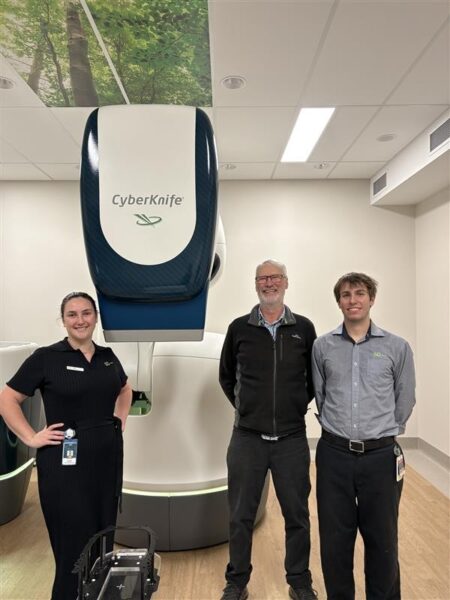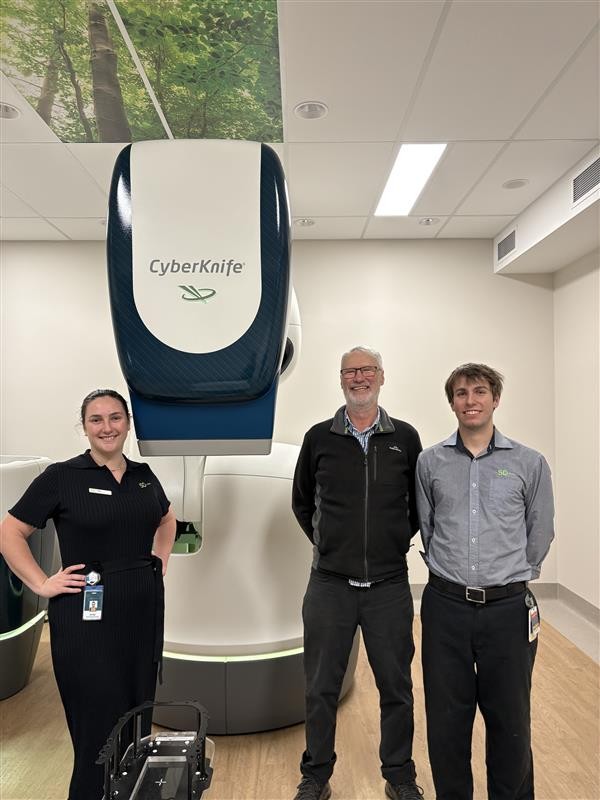
For John, staying active has always been an important part of life.
Living on a property in rural Victoria, John enjoys being outdoors, working around his property. So, when he was diagnosed with prostate cancer, finding a treatment option that aligned with his lifestyle and his evidence-based approach to healthcare was important.
As a research scientist, John took an active role in understanding his diagnosis, researching the available evidence and asking questions about his treatment options.
Today, following CyberKnife® treatment at 5D Clinics Melbourne, John continues to live an active lifestyle, complete with overseas walking holidays with his wife.
A diagnosis without symptoms
John was diagnosed with prostate cancer in late 2025 at the age of 72, following years of regular PSA monitoring. He had no symptoms and no family history of prostate cancer, but a gradual increase in his PSA to 5.5, prompted his urologist to recommend further investigation.
An MRI was followed a few weeks later by a highly sensitive PSMA PET scan and three small areas of concern were identified within the prostate, which were subsequently investigated through a biopsy which showed one of the smaller lesions to have a Gleason score 4+3. Much to John’s relief, both imaging procedures showed no spread or metastases elsewhere in his body.
For John, the experience reinforced the value of keeping up with regular health checks.
“I had no symptoms whatsoever,” he says. “My PSA had just steadily gone up year by year or every second year.”
Researching his options
Following his diagnosis, a prostatectomy was initially recommended. But with a career spent in research, John wanted to understand the evidence behind the different treatment approaches available to him, taking into consideration his age and the specific staging of his prostate cancer.
“As a research scientist, I have authored journal articles and regularly reviewed journal articles, and I’m a strong believer in evidence-based approaches to medicine,” says John.
He began reading the latest research and peer reviewed clinical trial publications comparing different approaches to treating prostate cancer, including state of the art radiotherapy and prostatectomy. He was particularly interested in both the effectiveness of treatment and the potential side effects.
Maintaining his active lifestyle was an important consideration.
“I do regular physical work around the property and I’m quite into long walking and other exercise,” John says.
After asking for a second opinion and discussing radiotherapy with a specialist, John learned about CyberKnife® treatment and decided it was the right option for him.
“I thought CyberKnife® was a good option.”
Five treatment sessions
John underwent five CyberKnife® treatment sessions in February 2026. A week before the treatment, during short out-patient procedure, four gold markers were placed within the prostate to assist with imaging during the procedure, along with a rectal spacer gel injection to help protect surrounding tissue.
With his scientific background and previous experience with imaging technology, John was particularly interested in the technology behind his treatment.
“I was very interested in what was behind the technology and how it was working,” he says. “There have been huge advances in medicine, and particularly, I think, in the radiotherapy areas.”
His experience of treatment itself was also more relaxed than he had anticipated. He appreciated having time to prepare for each session without feeling rushed and remembers the environment positively.
One unexpected highlight was being able to choose the music playing during the 30-to-40-minute treatment sessions. John opted for some old favourites, including Cat Stevens.
“I was listening to old albums that I had not heard for years. You’re laying on the table, keeping as still as possible, listening to this fantastic music,” says John.
Back to travelling just weeks later
Following treatment, John experienced what he describes as only minor and temporary urinary symptoms, including some urgency and hesitation in the weeks after completing treatment.
Just four weeks after finishing the CyberKnife® treatment, John and his wife boarded a plane for a previously scheduled trip to Europe.
His active lifestyle has continued since treatment.
“I’m continuing with all my various consultancy and committee work, and my wife and I continue with planned overseas travel and active walking holidays. It hasn’t interfered with my lifestyle at all,” says John.
John also continues to enjoy working around his rural property, tending to his garden, woodworking and keeping physically active.
At his three-month follow-up, John said his PSA had fallen to around 40 per cent of its pre-treatment level, and he continues to be monitored by his medical team.
Don’t be afraid to ask questions
Looking back on his experience, John encourages other men to stay on top of their health, ask questions and take an active role in decisions about their care.
“Regular PSA tests,” he says when asked what advice he would give others. “And if diagnosed, do your research. Write down the questions you want to ask your medical team.”
He also encourages people to explore the treatment options available to them and seek another clinical perspective when appropriate.
“Feel empowered to ask for a second opinion when you feel it’s warranted. Ask questions and look at all of the options available to you.”
For John, taking that approach helped him feel informed about his treatment decision and choose an option that suited both his circumstances and the active life he wanted to continue living.